The Two Major Parties in the US
The Democrats and Republicans have won every election since 1852, and they have controlled Congress since 1856. While the Constitution predates the two parties, they have evolved to become the two main contenders for the United States office. It is mainly due to the Electoral College and winner-takes-all voting rules, intensifying the competition. These rules force a system where the winner must take a 270 seat majority, making it nearly impossible for third parties or independents to viably run for office. It favors the broad parties over any niche or emerging parties, as voters don't want to "waste" their ballot, on a candidate that may get little to no representation.
So voters tend to consolidate around the two parties with the best chance of winning. Naturally, it is also a case of campaign infrastructure, national fundraising networks, and a deeply loyal voter base that also make it a lot harder for alternative parties to compete at the same scale. Also considering that there are few to no historical precedents of third parties or independents ever taking any prominent governmental positions, and it makes it difficult to argue their case. Yet they remain an integral part of the democratic system.
The Republicans
Founded in the 1850s, the Republican Party rose to prominence with the election of one of the most famous US Presidents in history, Abraham Lincoln. Just like with the Democratic Party, the 19th century ideology of the Republican Party vastly contrasts with its modern political spectrum. It is more widely associated with conservative policies, emphasizing limited federal government intervention, lower taxes, deregulation, and a strong national defense. Judicial appointments and constitutional interpretation are also central priorities for many Republican voters.
The party’s voter base often includes rural communities, religious conservatives, business interests, and suburban constituencies. Internal divisions exist between more traditional fiscal conservatives and populist or nationalist wings of the party. These ideological differences frequently surface during primary contests, where candidates compete to define the direction of the party before uniting for the general election. The party color is red, and their symbolic animal is an elephant.
The Democrats
The older of the two parties, the Democratic Party, was established in 1828. It is the liberal political party that sits on the center to center left of the political spectrum. Nowadays, some of the key policies of the Democrats revolve around healthcare reform, supporting unions, action on climate change, and advocating for civil rights protections. It has historically resonated more with urban voters, younger voters, and with more ethnic and racial minorities.
The party ideology is quite diverse within the liberal spectrum, ranging from the moderate to highly progressive, though they are generally thought of as being to the left of the Republican Party. Presidential nominees must often balance these internal perspectives while presenting a unified message in the general election campaign. Symbolically, the party color is blue, and the party animal is a donkey.
Third Parties in the US Two Party Dominant System
While they do not tend to make a huge impact on the final result of the elections, and come nowhere near truly running for office, third parties are an important part of US elections. Historically, these parties have generally brought up and influenced national debate to cast the spotlight on lesser discussed issues. They create the voice of voters who are not satisfied with the main two parties, and their input becomes a point of contention for the two dominant parties.
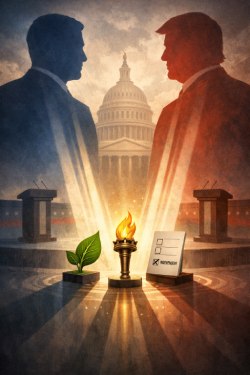
Addressing these concerns and reacting to them with positive policies can see one of the parties "win over" some undecided voters who have opted for the space in the middle. The third parties. The presence of these parties does not really harm either the Democrats' or the Republicans' chances of winning the elections, but they can bring alternative viewpoints to the table. Therefore, their case must be argued. It doesn't matter how unfeasible or improbable it is that these independents actually make a real run for office. Their presence alone can help diversify the goals of the two main political parties, and help voters figure out which of the two they will vote for, should they not want to "waste" their vote on an independent.
Notable Third Parties
Among the most recognized third parties are the Libertarian Party and the Green Party. The Libertarian Party typically advocates minimal government intervention, free-market economics, and expanded individual freedoms. The Green Party emphasizes environmental protection, social justice, and grassroots democracy. Other smaller parties periodically appear on ballots at the state level, though few achieve national visibility. Independent candidates also occasionally mount presidential campaigns, sometimes attracting substantial media attention. Even when these candidates do not win, they can influence the policy priorities of major-party nominees, especially in closely contested elections where small vote margins matter.
Party Platforms and Policy Priorities
Every four years, political parties formally adopt a platform at their national convention. These documents outline positions on major national issues such as taxation, healthcare, immigration, national security, and economic growth. Although not legally binding, platforms serve as policy roadmaps and messaging tools for campaigns. Platform development is often a negotiation process between various factions within a party. Delegates debate priorities and language, reflecting the diversity of viewpoints among party members. Once finalized, the platform helps unify supporters and communicate core principles to voters.
How These Are Communicated
Party platforms are communicated through multiple channels during presidential campaigns. National conventions introduce the platform to the public, often accompanied by speeches designed to highlight key themes. Campaign advertisements, candidate debates, and official party websites further reinforce platform priorities. Candidates may emphasize certain issues more prominently depending on the political climate. For example, economic conditions, international conflicts, or domestic policy debates can shift campaign focus. While the platform provides structure, messaging is often adapted strategically to appeal to swing voters in competitive states.
How Parties Select Presidential Nominees
The nomination process for presidential candidates is highly structured, starting from state-level contests and heading up to the national conventions and delegations. The entire process is designed to be efficient, yet also give the candidates time enough to properly address their policies and win over voters. Every step of the way, from the grassroots input to the institutional backing, is a challenge during these primaries, but it gives voters the assurances they need about who will head the political party.
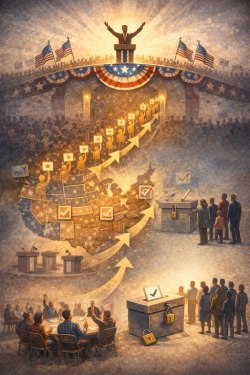
Voters directly influence the outcome through primary elections and caucuses, but party leaders, donors, and elected officials also play roles in shaping viable campaigns. The lengthy primary calendar tests candidates’ fundraising capacity, organizational strength, and appeal to different regions of the country before a nominee emerges for the general election.
Caucuses and Primaries
Primaries and caucuses are the mechanisms through which voters express their preference for presidential candidates. Primaries function similarly to general elections, with secret ballots cast at polling places. Caucuses, by contrast, involve in-person gatherings where participants discuss and publicly align with candidates.
Delegates are awarded based on these results, either proportionally or through winner-take-all formulas depending on party rules and state laws. As the primary season progresses, weaker candidates often suspend their campaigns, consolidating support behind leading contenders.
Open vs Closed Primaries
The participation in the party primaries can vary heavily depending on the state. Closed primary systems only allow voters who have registered with the specific party to cast a vote. Within the open primaries, all unaffiliated voters, and potentially even some who are registered to the other party, can vote in the primaries. This impacts the turnout and participation of the primaries, but perhaps more intriguingly, open primaries also force candidates to not just appeal to the core party members. They have to diversify their policies and vision, to provide something that their rival political party voters and any unaffiliated voters can also get behind.
How Political Parties Influence Governance
Even after elections, when the political candidate from one of the parties takes office, the now opposition party continues to shape the policies and affairs during that election. The president's ability to enact legislation and sign new laws into law can be aided or limited by their political party's influence in Congress. A unified house can agree on the legislation and allow for smoother, and more importantly, quicker changes in the legislation. Divided houses can lead to negotiations, compromise, and in the worst case scenario, partial or full government shutdowns, where the government cannot continue until the house has a majority agreement on the pending issues.
Party affiliation also influences committee leadership, legislative priorities, and oversight responsibilities. Beyond Congress, party alignment affects executive branch appointments and regulatory approaches. Cabinet members and agency heads are typically chosen because they align with the president’s party ideology, ensuring policy consistency. This can be done tactically, as these members can stay in federal governance long after the 4-year term comes to an end, and elections happen again.
Legislative Support
Presidents rely heavily on congressional members of their own party to advance legislative agendas. Party leaders in the House and Senate coordinate voting strategies and help manage negotiations. When internal party unity is strong, major initiatives are more likely to succeed. However, internal divisions can complicate the process. Lawmakers must balance national party priorities with local constituency interests. Successful presidents often invest significant time building coalitions within their party to secure necessary votes.
Judicial Appointments
One of the most consequential powers of a president is the nomination of federal judges, including Supreme Court justices. Choosing these judges is a strategy that can serve the government for many years to come, as they can carry the party political ideology beyond the 4 year terms. The nominations for these federal judges must be done practically, with that in mind. The judges essentially help smoothen the legislation and legislative procedures for the president, and more importantly, reinforce their control over the Senate.
Executive Agencies and Policy Direction
Presidents appoint leaders of federal agencies who are responsible for implementing laws and managing regulatory frameworks. These leaders can shift policy enforcements in virtually ever area required, from environmental regulation to financial oversight. The legislation defines the legal parameters, and how these are enforced and executed in practise. It does not just impact how old laws are interpreted. Thinking forward, it can also signal how new laws are introduced and applied to the system.
The Role of Parties in Voter Mobilization
Parties launch campaigns throughout the months preceding US Presidential Elections, to provide insights into their new agendas but also to mobilize voters. Behind the campaigning, there are extensive databases, fundraising networks, and volunteer oriented operations that must be kept in account to help bolster the turnout among supporters.
The methods that the two main parties use are based around their existing reputations and their current resources and influential partners. Resources must be heavily invested into digital outreach, targeted advertising, community events, and door-to-door canvassing efforts. In closely contested states, the stakes are even higher. Because in these states, the two main parties have to win over the undecided voters, most of whom will eventually opt for one of the two parties if they want their vote to count, and so messages must be tailored, specific demographics must be reached, and engagement must be enhanced.