Basic Differences Between Primaries and Caucuses
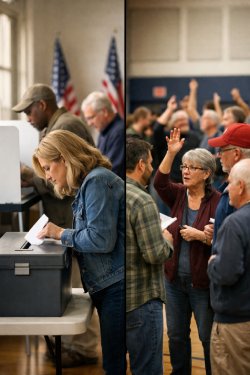
The goal is the same, but the methods are different. Primaries resemble a traditional election, in which eligible voters in each state can vote for the candidates who will then lead the party. These voters cast their ballots at polling locations, or they can use alternative methods to vote such as absentee voting or mail-in ballots. A caucus is the rarer of the two methods, and involves a show of hands at a meeting run by the party. Instead of casting votes secretly, these are events that are specifically designed to give the nominees a direct interaction with the voters.
At the end of the meeting, the voters can publicly align with any of the nominees. This was the more popular of the two, historically, as it requires in-person participation and it gives the nominees a chance to win over their audience on the spot. However, recently, more states have moved from caucuses to primaries, to make a more accessible model with higher voter participation.
Can States Have Both Primaries and Caucuses?
Each party can hold its own nomination process in each state. Traditionally, states do not hold a primary and a caucus for the same party in the same election cycle. Different parties may choose alternating systems for different states, such as a primary for a larger state where in-person accessibility is more challenging, but a caucus for a smaller state where it is easier to manage. As for who decides whether the party uses a primary or a caucus, it usually depends on how much the party is willing to spend for the delegation in that state.
The state will generally fund a primary, and if that is the case, the Democratic and Republican parties will most often opt for the primary. But if the state does not offer to fund a primary from its own resources, then the parties tend to organize a caucus. That is, unless spending on a primary is justified for a given scenario - such as the population is too dispersed or large to organize such a caucus.
Do the State Level Laws Change Regarding Primaries and Caucuses
So therefore, the type of vote can change after each cycle. In fact, the state laws regarding primaries and caucuses can also change too, meaning that the rules on a potential primary can impact whether or not the party opts to host one. For instance, if the laws change regarding voter eligibility, or the structuring of the primary (open vs closed), or even how the winners are chosen. Then, there are external impacts to consider, such as the scheduling of the elections, and whether holding a primary is a useful means to spend resources, or whether it is unnecessary.
In addition to state law, national party committees regularly update their own rules before each presidential cycle. These adjustments may involve delegate allocation formulas, participation requirements, or calendar penalties for states that schedule contests too early. Therefore, the systems can change often, responding to political pressure, changes in strategy for the parties, and to fit into the schedule without depleting resources that can be saved.
How Primary Elections Work
Members of the public can cast their ballots, selecting a candidate from the list, and then these are counted. The goal, for the candidates, is to win delegates. They can win the popular vote in a state, but winning the party leader seat requires winning over the majority of delegates. The primaries are private, so people can vote for any candidate that they want. Primaries tend to attract higher turnout than caucuses because they are easier to participate in. Voters do not need to attend lengthy meetings or publicly declare their preference. Instead, they cast a ballot quickly and confidentially. This accessibility makes primaries the dominant method of nomination in modern US presidential elections.
Open Primaries
In an open primary, voters do not need to be registered members of a political party in advance. On Election Day, they choose which party’s primary ballot they want to participate in. Open primaries allows independent and unaffiliated voters to influence the selection of party nominees. Supporters argue that open primaries encourage broader civic engagement and reduce strict partisan barriers. Critics contend that they allow voters from one party to strategically participate in another party’s contest. Regardless of the debate, open primaries tend to expand participation beyond committed party members.
Closed Primaries
Closed primaries limit participation to voters who are officially registered with the party holding the election. Only registered Democrats can vote in the Democratic primary, and only registered Republicans can vote in the Republican primary. With closed primaries, only registered party members can impact the primaries, and so there is no conflict of interest. Proponents argue that closed primaries preserve party identity and prevent outside interference. However, they exclude independent voters from participating unless they change party registration beforehand. The impact of closed systems depends largely on how many voters in a state identify as independent.
Semi-Open and Semi-Closed Systems
Some states have semi open or semi closed systems, which break the mold. In semi-open systems, unaffiliated voters may choose which party’s primary to vote in, but registered party members must stick to their own party. Semi-closed systems function similarly, though specific rules vary by state. These hybrid models bring a balance to the party control, but also invite broader participation, increasing voter turnout. The exact way that they work can vary from state to state, because each authority can make its own special rules for the primaries. Again, these are not influenced nor controlled at a federal level at all.
Open-All Candidate Primaries
A small number of states use open-all candidate systems, sometimes referred to as “top-two” or nonpartisan primaries. In these contests, all candidates appear on the same ballot regardless of party affiliation. The top two finishers advance to the general election, even if they belong to the same party. While more common in congressional and state elections, this format demonstrates another example of how flexible primary systems can be. It shifts the focus away from party based ballots and toward candidate based competition.
Caucus Systems Explained
Caucuses operate through in person meetings organized by political parties rather than through traditional ballots. Participants gather at designated locations and physically group themselves according to candidate preference. This meeting gives the candidates a chance to win voters on the spot. They can try to win over the crowd with their communications and speeches. Another intriguing aspect of caucuses is that if a candidate fails to hit the minimum viability threshold, their supporters can be taken by another group before the final count is taken.
Voters can, and do, change their minds if a candidate is especially persuasive and can gain their confidence, especially if the voter's original nominee fails to muster the crowd and fails to reach the minimum. Because caucuses require time, public participation, and often multiple rounds of discussion, turnout tends to be lower than in primaries. However, supporters argue that caucuses promote deeper civic engagement and discussion among participants. In recent cycles, logistical challenges and concerns about accessibility have led several states to replace caucuses with primary elections.
Nominees are Awarded Delegates

Getting the popular vote is a strong confident step for candidates, but the goal is not to win in just one state, but to collect delegates. The delegates are the official votes for the party nominee. The number of delegates in a state is determined by the party, based on population, past voting patterns, and the rules of the party. The Democrats and Republicans do not actually need to have the same number of delegates, because the primaries for either party are done separately.
Historically, Democrats have used population and Electoral vote strength to determine the number of delegates for a state. Whereas Republicans use the Electoral College votes as a baseline, adding more delegates for states that vote Republican in the presidential elections, and those that have elected Republican governors or members of Congress. Candidates accumulate delegates throughout the primary calendar. To win the nomination, a candidate must secure a majority of pledged delegates. The method used to allocate those delegates significantly shapes campaign strategy and the pace of the race.
Proportional Allocation
Under proportional allocation, delegates are distributed according to the percentage of votes each candidate receives. If a candidate wins 40 percent of the vote, they receive roughly 40 percent of the delegates, provided they meet any minimum threshold requirements. Proportional systems tend to extend the length of competitive races because multiple candidates can accumulate delegates simultaneously. This encourages broader campaigning across diverse states rather than focusing solely on outright victories.
Winner-Take-All Allocation
Winner-take-all systems award all delegates to the candidate who receives the most votes in a state. Even a narrow victory can result in a complete delegate sweep. This method can quickly solidify a frontrunner’s advantage and shorten the nomination contest. Some states use hybrid systems that combine proportional and winner-take-all elements, awarding statewide delegates proportionally while allocating district-level delegates to local winners.
Pledged vs. Unpledged Delegates
Most delegates are pledged, meaning they are committed to supporting a specific candidate at the national convention based on primary or caucus results. Unpledged delegates, sometimes consisting of party officials or elected leaders, may have more discretion depending on party rules. The balance between pledged and unpledged delegates can affect close nomination races, though pledged delegates overwhelmingly determine outcomes in modern contests.
Why Early States Influence Momentum
Primary elections are staggered across a calendar that begins with a handful of early states. These early contests often attract intense media attention because they provide the first measurable results of the campaign season. Strong performances can generate positive press coverage, increase fundraising, and enhance a candidate’s perceived viability.
This phenomenon is known as momentum. Even though early states account for a relatively small portion of total delegates, their symbolic importance can reshape the race. Candidates who underperform may struggle to maintain financial support, while those who exceed expectations often experience surges in national recognition and backing.
The Role of the National Party Conventions
After months of state level contests, delegates gather at the national party conventions to formally nominate the presidential candidate. By this stage, a candidate has usually secured a majority of pledged delegates, making the convention a ceremonial confirmation of the primary results.
Beyond officially selecting the nominee, conventions serve to unify the party and adopt a platform outlining policy priorities. They mark the transition from intra-party competition to the general election campaign. Understanding how primaries and caucuses feed into the convention system completes the picture of how presidential nominees are chosen in the United States.