Full Timeline of Typical Election Cycles
It is easiest to understand this entire process by going through a cycle. While the prospective candidate cases are opened approximately 2 years before Election Day, the cycle in which the public get involved generally starts in January of the final year of a 4-year Presidential term.
January-June: Primaries
The primaries or caucuses are elections to determine which nominee becomes the candidate for each party. In other democracies, these are usually internal procedures carried out by party officials in votes. In the US, they actively involve the public, and the elections are staggered across the course of several months. The nominees for the Republican Party and those for the Democrats have to clash with their fellow party nominees, competing to become the leader of their party. They are directly voted for by the public, however there is a winner takes all system enforced with proportionate representation.
July-August: National Party Conventions
Both parties hold a national convention to formally nominate the party's presidential candidate and vice presidential candidate, decided by the primaries. This is a formality that officially recognizes the party leader. Following the national conventions, the race is on. The candidates have to begin their broader campaign messaging, spending on advertizing, creating ground operations, and trying to target voter blocs who they can potentially persuade to vote their way. The polls see an uptick of activity, and fundraising for the candidates also takes off.
September-October: Presidential Debates
At the height of the campaigning, the Commission on Presidential Debates organizes three presidential debates. These are typically held at the end of September, early to mid October, and the third is held shortly after the second, in mid October. These are designed to give voters a taste of how the Republican and Democratic candidates respond to identical questions under the same conditions. Contrary to popular belief, the debates do not have a major impact on the actual results of the election. However, they are important in building momentum and raising important issues, giving viewers more clarity about the political aspirations and policies of the candidates.
September-October: Voter Registration Deadlines
Around this time, the voter registration deadlines also start to appear. Most states close the registration 30 days before Election Day, however, some allow registration as late as 15-20 days before the the day, and even fewer states actually allow US citizens to register for voting on the same day. This is a necessity for a US citizen to take part in the voting. If they are not registered, or have been taken off the voters register, then they have to quickly register in time, so they can vote in the upcoming election. This time is also usualy when deadlines for mail-in ballot requests pop up. Though these, just as the registration deadlines, vary from state to state.
October-Early November: Early Voting
The early voting and mail-in ballots can happen weeks before Election Day. Voters may opt for these methods to avoid the lengthy queues and waiting times that can be expected on Election Day. Mail ballots must arrive in the polling locations by Election Day. Only a few states allow postmarked ballots to arrive later, but this can draw out the counting process.
1st Tuesday in November: Election Day
The first Tuesday, following the first Monday in November, which usually falls between the 2nd and 8th, is Election Day. Registered voters can cast their ballots at local polling stations, voting for the President and Vice President, Congressional races, and potentially state and local offices. However, it is important to note, that voters are not voting directly for the president. They are voting for Electors, who will represent them in the House.
November-December: Counting the Votes
Late ballots and alternative submission methods, can draw out the process of counting the votes. In close elections, it can take further time, and the results can shift drastically, which can result in controversial and late swings.
Mid December: Electoral College Vote
After the votes are counted, it is clear who has won the Presidential race. However, there is still the formality of the Electoral College Vote to go through before the President and Vice President officially win. The Electors gather and send their votes to Congress. There are 538 electoral votes in total, and a majority of 270 is needed for a candidate to win.
January 20: Inauguration
On the 20th of January, the following year after the Elections, the President elect is sworn in, and they officially begin their new term, starting another 4 year cycle.
A Breakdown of the Primaries
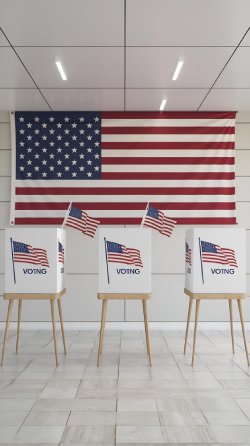
The primaries are conducted on a state by state basis, and are used to pick a presidential candidate among the two parties. This process is decentralized, and allows the public to directly influence which of the nominees will eventually take the helm. These contests are done via primaries and caucuses, which are two types of voting procedures.
The goal of the primaries and caucuses is to secure delegates, who basically represent the candidates at the party's national convention. The number of delegates is determined by the party laws. The Democratic Party and Republican Party have their own strategy and preferences for choosing primary types and the number of delegates, which is why they don't need to be the same in any given state. The system can favor certain candidates over others, and the strict calendar schedule of these primaries can also serve to favor certain nominees over others.
Primaries vs Caucuses
The primaries, which are the more common of the two, are done by casting ballots, much like on Election Day. Though there are multiple types of primaries, and each state has its own laws regarding how they are conducted.
Closed primaries can only be voted by registered voters who have affiliated themselves with the party in question. Open primaries, on the other hand, can be voted on by unaffiliated voters, or even by members registered to the other party, in some cases. There are also semi-open and semi-closed primaries, which allow some independents to vote as well, but with maintaining party registration conditions for others. In some states, there are no distinctions between parties, and so all the candidates appear on a single ballot. In these cases, the open-all or top-two and top-four primaries, there is a broader participation but it is also criticized for a lack of uniformity in the votes.
Caucuses, on the other hand, are not done by voting ballots, but in person at meetings. The party supporters group together, and must decide on candidates on the spot. It creates more engagement between the candidates and their voters, but at the same time these tend to have smaller turnouts.
Brief Explanation of the Electoral College
Candidates running for office must win a 270 majority vote in the Electoral College. There are 538 seats in total, of which 435 make up the House of Representatives, 100 make up the Senate, and the remaining 3 represent the District of Columbia. The House of Representatives are allocated in proportion to the population of each state, whereas the Senate is not, each state has 2 members. The Electoral College uses a winner takes all format, meaning that the runner who won the majority of electors in a state wins the entire slate of that state.
In most states, there is one elector per congressional district, which are redrawn every 10 years based on census data. This influences the way a candidate campaigns in each state, as they may target voter blocs in urban or rural areas, looking for opportunities to build support to topple their opponent in a state. If they can get the majority, they win all the electors for that state.
Types of States in Elections
A distinction needs to be made between the safe and the swing states here. The safe states are seen as those that historically always vote for Republican or Democratic candidates. They don't change their alliance often, these are generally seen as the safer votes that either candidate can rely on. The swing states, on the other hand, are regions that are usually undecided, alternating between Republican and Democrat, and therefore opening a window for both presidential candidates. Turning the swing states can help their cause, and give them the additional votes needed to reach a 270 seat majority.
However, that does not mean safe states are guaranteed to vote in line with their previous election cycles. Even safe states can be swung, meaning the campaigns should be careful to protect their historically favorable states in the same way they look for more support in the historical swing states.
Campaigning Strategies
Election campaigns have drastically evolved over the course of the last election cycles, and now they are associated with massive fundraisers, nationwide communications, grassroots networking and outreach projects, and the ever expanding influence of digital marketing. Collecting data, targeting voter blocs, and creating messages to reach sub groups is a lengthy process in itself, as the campaigning teams must look for ways to communicate their agenda and find new angles to win over undecided voters.
Data Analytics and Microtargeting
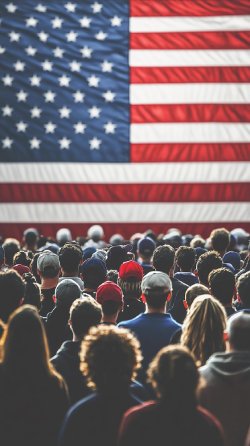
Modern presidential campaigns are driven as much by data as they are by ideology. Campaign teams collect and analyze vast amounts of voter information, including demographic trends, voting history, and consumer behavior. This allows them to build detailed voter profiles and create highly specific messaging aimed at persuading narrow segments of the electorate. This practice, often referred to as microtargeting, has become a defining feature of contemporary US election strategy.
Fundraising and Political Action Committees
Presidential campaigns require enormous financial resources. Fundraising begins well before the primaries and continues through Election Day. Candidates raise money through small individual donations, high-dollar fundraising events, and digital platforms. Financial strength often determines how effectively a candidate can communicate their platform nationwide. They also need these resources to compete with the opposition, and big donations from influential business people or celebrities have also proven to make an impact in recent elections.
Ground Game and Voter Mobilization
Beyond television advertisements and national speeches, campaigns invest heavily in what is known as the “ground game.” This refers to the physical organization of volunteers and staff across key states. Field offices are opened, voter registration drives are organized, and canvassers knock on doors to encourage turnout. Mobilization is particularly crucial in swing states, where a small shift in voter turnout can alter the allocation of electoral votes. The objective is not only persuasion, but participation. Energizing existing supporters to actually cast a ballot can be just as important as winning over undecided voters.
Digital Campaigning and Social Media Influence
Social media platforms have transformed presidential campaigns. Candidates now communicate directly with voters through online videos, live broadcasts, and rapid-response messaging. Digital campaigning allows for immediate reactions to breaking news and debate performances. It also enables campaigns to shape narratives quickly, sometimes bypassing traditional media outlets. However, the digital landscape also presents challenges, including misinformation and the rapid spread of unverified claims. As a result, managing online presence has become a strategic priority for modern candidates.
Polls, Public Opinion and Debates
As Election Day draws ever nearer, voters mobilize en masse and candidates have to be careful to stay focused and not lose any momentum. This momentum can be tracked through a variety of polls, which explore the public opinion on the candidates, specific issues, or policies that have been discussed. They are an important tool for political parties to look for relevant subject matter and topics that they can address, and help boost their image in the public eye.
Though perhaps the most eye-catching of all these are the Presidential Debates. These are not pitched to select voter blocs in a specific state. These are nationwide, head to head clashes between the two candidates, and an opportunity for viewers to see how they respond to pending political, financial, domestic, societal, and environmental issues.
The Role of National and State Polling
Polling plays a central role in shaping public understanding of presidential races. National polls measure overall voter sentiment, while state polls are often more significant due to the Electoral College system. A candidate may lead nationally but trail in key swing states, which ultimately determine the outcome. Campaigns closely monitor polling trends to adjust strategy, redirect resources, and refine messaging. Although polls are snapshots rather than predictions, they strongly influence media coverage and voter perception.
Momentum and Media Narratives
Public opinion is not formed in isolation. Media coverage amplifies polling results, debate performances, and campaign events, creating narratives about momentum. A candidate perceived as gaining strength may attract additional donors and undecided voters. Conversely, negative coverage can slow fundraising and dampen enthusiasm. These narratives can sometimes become self-reinforcing, shaping how voters interpret subsequent developments in the race.
Debate Preparation and Strategic Framing
While outlining the timing of presidential debates, the preparation behind them is equally significant. Candidates often engage in extensive mock debates, rehearsing responses to potential questions and practicing rebuttals. Advisors study opponents’ past statements to anticipate lines of attack. The goal is not necessarily to convert large numbers of voters in one evening, but to avoid major missteps and reinforce key campaign themes. A single strong or weak moment can dominate headlines for days, influencing short-term polling shifts.
The Influence of Undecided and Independent Voters
In most elections, a relatively small percentage of voters remain undecided late into the campaign. These individuals, along with registered independents, can be decisive in closely contested states. Debates, economic conditions, and late-breaking events may influence their final decision. Campaign strategies often prioritize these voters in the final weeks, recognizing that even minor shifts can affect the Electoral College outcome.