How Presidential Debates Are Made
Presidential Debates are not hosted by either party, they are organized by a nonpartisan, non-profit organization called The Commission on Presidential Debates, or CPD. The CPD was established in 1987, after the future of these debates were thrown into question. Debates were held between Kennedy and Nixon in 1960, but all but disappeared until the 1976 election. They were continued until the 1984 election, and, uncovering the potential to positively impact voter turnouts and help communicate candidate policies, the organization was made to ensure these became part of the tradition of US Presidential Elections.
Candidate debates are not actually mandated by the US Constitution, but they have since become a staple of every US election cycle. They are held after the primaries, when the political parties have their candidates, late in the election cycle. This makes it all the more relevant to any undecided voters, and any voters who have not yet mobilized.
Debate Formats and Structure
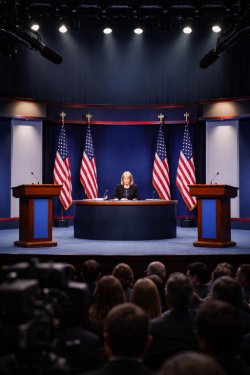
The rules of the debate, and its format, can vary heavily. Usually, there are no opening statements before the debate starts, but there can be closing statements. The candidates can be positioned behind podiums, or at conference tables, with the moderator at the far side. These are usually conducted with a set of questions, poised at both candidates. The questions can either be asked by the moderator, or even a member of the audience. A coin is tossed to determine which candidate goes first, and thus who will make their closing remarks first. The candidates answer questions in alternating turns, and they have 2 minutes to satisfy the audience with an answer. Following this, the opposing candidate has 1 minute to react to this answer, and rebut their arguments. The discussion of each question can be extended by the moderator by 30 seconds, if required.
These structural elements shape how arguments unfold and can influence how viewers interpret the exchange. A tightly controlled format tends to favor concise messaging, while looser formats allow for more interaction and confrontation, with the moderator controlling the momentum and flow dynamics. They do have to step in on occasion, if the candidates exceed their given time, or they do not give satisfactory answers to the rebuttals or cross questions.
The Role of Moderators
Moderators are crucial to creating fair and informative debates. Above all, they must be nonpartisan questioners, who keep the time and ensure that the candidates remain on topic and do not turn the debates into personal attacking contests or irrelevant arguments. Order must be maintaned, and moderators also have the discretion to ask follow up questions or fact check the candidate's statement on the spot. This gives more clarity and transparency to the debates, to ensure that the viewers are given factual information and meaningful disccusions.
The moderators are often selected from media professionals, usually from major news organizations. It is pivotal to pick a moderator who is, and is perceived as, being neutral in the discussions. Any accusations of bias can shape the post debate narratives and undermine the performance as a whole. The topic selection must also stay on track and not use questions to set up or put pressure on either of the candidates.
How Candidates Prepare
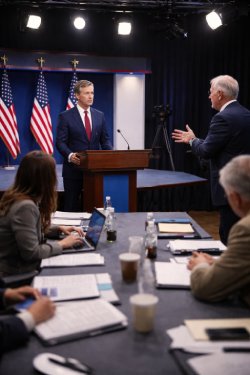
Debate preparation is a structured and intensive process. Campaigns often begin preparing weeks in advance. They assemble briefing books, reviewpolicy details, and conduct mock debates. These are essential to make sure that the candidate is ready for any question, and will not be daunted by the answers their opponents give. Composure is just as important in the debates as the answers themselves, to give strong, competent impressions to the viewers. Staff members frequently play the role of the opposing candidate, replicating speaking style and likely lines of attack. This helps the candidate prepare for any turn of events or speaking points.
Preparation typically focuses on three areas:
- Policy mastery: Ensuring factual accuracy and clear articulation of positions
- Message discipline: Crafting concise responses that align with campaign themes
- Outward presence: Managing tone, facial expression, and nonverbal cues can give the impression of a determined and confident candidate
Candidates also prepare for specific vulnerabilities. If a campaign anticipates criticism on a particular issue, rehearsed responses are developed to pivot toward more favorable ground. Debate training can include coaching on posture, eye contact, and pacing, elements that affect how viewers perceive confidence and credibility. Because debates are broadcast events, visual presentation matters. Camera angles, lighting, and split-screen shots can capture subtle reactions. A moment of visible frustration or hesitation can circulate widely after the event, amplified through media and social platforms.
Historical Impact of Presidential Debates
The first televised general election debate between John F. Kennedy and Richard Nixon in 1960 is seen as one of the turning points in US Presidential Elections. It gave viewers an up and close encounter between the two candidates, and viewers noted how the aspiring young Kennedy seemed far more confident in his demeanor and composure. While the debate did not win the election for Kennedy by itself, this event has long been regarded as a pivotal time in the 1960 election cycle.
Since then, debates have produced memorable moments that shaped public discussion. Some exchanges clarify policy differences, others generate viral clips that dominate headlines. In many elections, debates reinforce existing preferences rather than dramatically altering them. However, in closely contested races, even small shifts in undecided voter sentiment can be consequential.
Debates also serve as benchmarks. Media coverage following a debate often centers on “who won,” though that determination is subjective and influenced by partisan interpretation. Polling conducted immediately afterward may show temporary movement, but longer term impact depends on how campaigns and media frame the event in subsequent days.
Influence on the Public Perception
The research indicates that the Presidential Debates themselves have little impact on the results of the election. People who watch the debate are often the voters who have already decided who they will vote on, and they watch the program with a bias. There is little chance that a dominant performance by the other party will make these voters change their minds and pick the opposing party. Debates are aimed more at the undecided voters. They give potential voters a direct comparison between the two candidates. It shows how these candidates respond to the same questions, under the same conditions.
The tone, demeanor, and confidence are all signs that can show a candidate is better suited to the role, as they can perform under the pressures. Arguably, the most important aspect, for all viewers - decided voters and unaffiliated alike - are the reactions to the questions regarding policies. Committed voters and undecided voters can both view highlight reels or tune in to watch how the nominees respond to key questions regarding impending issues. With a fair moderator and a well constructed question, candidates must give viewers an indication of how they will manage given subjects. The lack of an answer or question dodging can be a weakness, especially when the opposing candidate can provide a satisfactory solution.
Media Amplification and Post-Debate Narratives
In the modern information environment, debates extend beyond the stage. Analysis begins immediately after closing statements. Television panels, digital publications, and commentators evaluate performance, rhetoric, and strategic effectiveness. Post-debate coverage can shape perception as much as the debate itself. A widely repeated interpretation, for example, that one candidate appeared defensive, may solidify into conventional wisdom.
Campaigns attempt to influence this narrative by deploying surrogates to media outlets and rapidly circulating favorable clips. The rise of social media has accelerated this process. Short excerpts can gain viral traction within minutes, sometimes detached from broader context. This fragmentation means that many voters experience debates in highlights rather than as continuous discussions.
Limitations and Criticisms
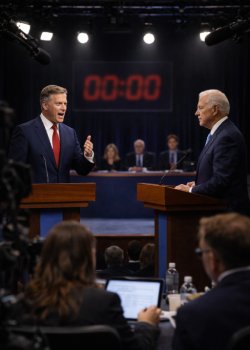
Debates are not free of their criticisms and limitations, sometimes they are immediately called into question by the candidates themselves. The time limitations can restrict the depth of the policy discussions, and also be used as a means for candidates to avoid specific questions that they do not want to give proper clarity on. Complex issues become simpler, to meet these time constraints, and this can discourage nuanced discussions. In their place, candidates may fall back on concise lines or gimmicks to answer the questions, thus ticking the box. Another criticism is that the format of the debates can emphasize performance skills over the actual political agenda.
A candidate with a stronger rhetorical style or charm may be able to unnerve their opponent and harm their arguments, but without contributing to communicating their own campaign details. Supporters would argue that this rhetoric is a necessary skill for whoever is sworn into office, but others would see it as a trick that evades real discussion. Additionally, debates emphasize performance skills alongside substantive knowledge. Critics argue that rhetorical style and television presence may overshadow policy depth. Supporters counter that communication ability is itself a critical leadership skill.
The Continuing Role of Debates in Elections
Presidential debates remain central to campaign seasons because they offer structured, widely viewed opportunities for direct engagement. They provide a rare moment when competing candidates address each other and the public simultaneously. While debates seldom determine elections independently, they contribute to the cumulative process by which voters evaluate leadership, policy priorities, and personal demeanor.
Key debates that highlight crucial topics and give insights into the political ideology of the candidates, and their solutions, can live long in the memory. They serve to keep the bar high for these debates, marking them as crucial points during the election campaigns for voters to tune in and get answers. The outcome of the debates, while contentious and subjective, can also give the candidates momentum and important pointers for the rest of the campaign. These are the stand out points of the election campaigns, and a strong performance at the Presidential Debate can arguably make the point in case for a confident and assuring candidate.
These debates shape narratives, energize supporters, and sometimes alter the trajectory of campaigns. In a political environment defined by constant messaging, debates stand out as concentrated events where contrast is immediate and visible. It gives the voters an immediate point of reference, and perhaps an insight into how either candidate will run the country should they take office. The enduring presence of Presidential Debates reflects both their symbolic importance and their practical role in informing the electorate.